
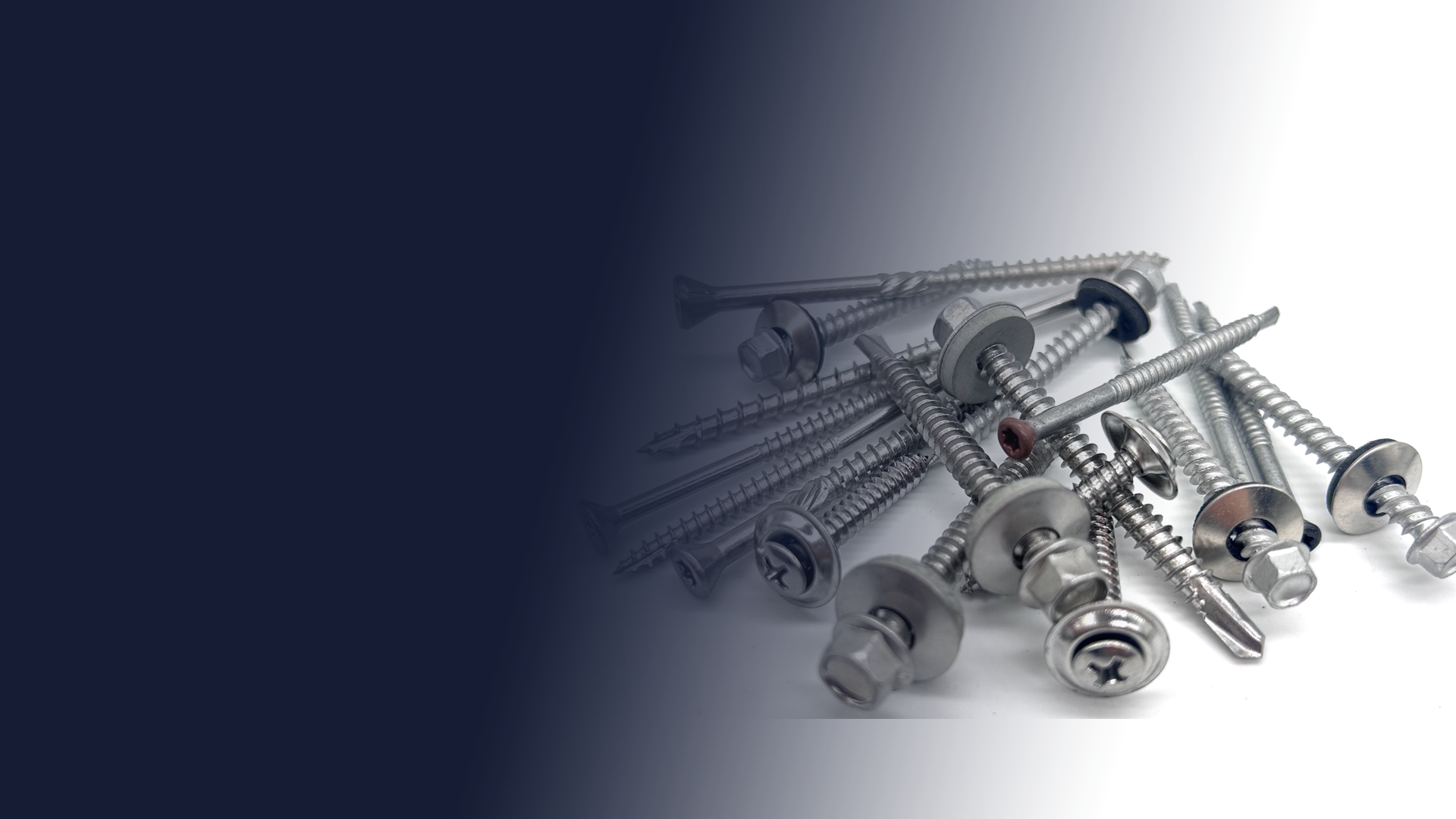
ASTM Stainless Fastener Standards: 304, 305, 316 & 410 Screws Guide
Complete guide to US ASTM, ASME & SAE standards for stainless steel screws (304, 316, 410, 305). Sourcing stainless steel screws for the US market? Learn ASTM F593, SAE J78 & ACQ codes for stainless steel self drilling screws, deck screws, wood screws. Get factory-direct quotes!
Defining US Stainless Steel Screws Standards & Building Codes
When sourcing stainless steel fasteners for the US market, compliance isn’t just a preference—it’s a structural and safety requirement. Understanding the governing standards ensures your inventory meets local building codes and client expectations.
1. ASTM Standards (Material & Mechanical Specifications)
ASTM F593: The primary standard specification for stainless steel bolts, hex cap screws, and studs. It covers chemical composition and mechanical requirements for austenitic (304, 316, 305) and martensitic (410) alloy families.
ASTM A240 / A582: Governs raw wire chemical purity, ensuring strict control over chromium, nickel, and molybdenum content to eliminate premature structural degradation.
ASTM B117 (Salt Spray Testing): The standard practice for accelerated corrosion testing. Staingrip stainless steel fasteners undergo rigorous ASTM B117 salt spray exposure to verify corrosion resistance in high-moisture and marine environments.
2. ASME & SAE Standards Dimensional & Drilling Performance
ASME B18.6.3: Defines standard thread pitch, head dimensions, drive recesses, and tolerances for machine, tapping, and self-drilling screw profiles in inch series.
SAE J78: Specifies key performance criteria for self-drilling tapping screws, including case hardness requirements, drill point geometry, and maximum drilling times into specified steel plate thicknesses.
3. Building Codes & Pressure-Treated Wood Compliance
IRC & IBC Codes: The International Residential Code (IRC) and International Building Code (IBC) mandate corrosion-resistant fasteners in all exterior applications, wet zones, and structural framing.
AC257 (ICC-ES Acceptance Criteria): Alkaline Copper Quaternary (ACQ) and Copper Azole (CA-B/CA-C) pressure-treated lumber contain high concentrations of elemental copper, creating an aggressive galvanic corrosion cell with standard steel. Building codes require Grade 304, 305, or 316 stainless steel to prevent rapid fastener shear and failure in treated wood.


Stainless Steel Grade Comparison Matrix as per ASTM F593
How to Distinguish Stainless Steel Screw Grades According to ASTM Standards?
Selecting the right alloy for custom stainless steel screws requires balancing structural integrity with environmental resistance. But what key element ratios differentiate one grade from another under ASTM F593 specifications?
Below is a reference comparison table based on ASTM F593 standards. It details the primary chemical percentages—specifically Carbon, Chromium, and Nickel—for standard fastener materials like 304, 305, 316, and 410 stainless steel. Use this breakdown to quickly verify material compliance for your next sourcing project.
How to Select the Right Stainless Steel Screw Grade for Your Project
Choosing the optimal alloy goes beyond basic chemical composition—it directly dictates mechanical performance, installation efficiency, and long-term durability. How do you determine which stainless steel grade aligns perfectly with your environmental and structural requirements?
The comparison table below breaks down the core performance metrics across Grade 304, Grade 305, Grade 316, Grade 410, and Bi-Metal fasteners. Review their metallurgical properties, corrosion resistance levels, and tapping capabilities to select the exact grade for your application.


Product-Specific Application & Compliance Standards
1. Stainless Steel Self-Drilling Screws
Key Standards: SAE J78, ASME B18.6.3
The Challenge: Standard 304/316 austenitic stainless steel cannot be heat-treated to the hardness needed to penetrate thick structural steel plates.
The Staingrip Solution:
410 Stainless Steel: Precision heat-treated to drill through heavy metal sheets quickly while maintaining moderate weather resistance.
Bi-Metal Technology: Laser-welded 304 or 316 body fused with a hardened carbon steel drill point. Delivers 100% rust prevention on the exterior head/shank with industrial-grade drilling power.
Related Products:
2. Stainless Steel Decking & Composite Screws
Key Standards: IRC Code ACQ Compliance, ASTM F593
The Challenge: High torque demands during high-speed insertion into dense hardwoods or composite decking often cause head shear (snapping) in low-grade fasteners.
The Staingrip Solution:
Formulated with Grade 305 or 316 Stainless Steel for high nickel ductility, reducing head breakage under extreme drive torque.
Deep Star/Torx drive recesses to prevent cam-out, combined with Type 17 slash points and under-head countersinking nibs for clean finish installations.
Related Products:
3. Stainless Steel Metal to Metal/Wood Roofing Screws
Key Standards: ASTM C1513, ASTM D2000 (EPDM Gaskets)
The Challenge: Exposure to rain, UV rays, and thermal expansion causes roof leaks if washers degrade or threads back out.
The Staingrip Solution:
Heavy-duty 304/316/410 stainless shank with integrated high-grade EPDM bonded sealing washers.
Weatherproofing tested to resist long-term UV degradation, ozone exposure, and extreme temperature swings from -40°F to 220°F.
Related Products:
4. Stainless Steel Wood Screws & Heavy Duty Wood Construction Screws
Key Standards: ASME B18.6.1, ASTM F593
The Challenge: Massive shear loads in timber framing and log home construction require elevated pull-out and shear values.
The Staingrip Solution:
Engineered coarse threads for maximum holding power in softwood, hardwood, and engineered timber.
Optimized shank diameter designed to prevent wood splitting while meeting US shear strength criteria.
Related Products:
5. Stainless Steel Sheet Metal Screws & Self-Tapping Screws
Key Standards: ASME B18.6.3, ASTM F593, ASTM C1513
The Challenge: Fastening high-strength metal sheets, HVAC ducting, or heavy steel studs requires extreme driving torque and penetration power that standard 300-series stainless steel—prone to thread flattening, tip curling, and head snapping—simply cannot handle.
The Staingrip Solution:
Heat-Treated SS410 Power: Heat-treated 410 stainless steel construction delivers exceptional surface hardness and core toughness, allowing the screw to tap its own threads through dense sheet metal without dulling or shearing off.
Aggressive Tapping Threads: Engineered Type A and Type AB thread profiles bite directly into single and multi-layer steel assemblies, offering maximum thread engagement and superior resistance to strip-out under high clamping force.
Related Products:
Frequently asked questions
Why can’t I use standard 304 stainless steel self-drilling screws into 1/4" steel plates?
Grade 304 stainless steel belongs to the austenitic family, which cannot be hardened through heat treatment. When forced into thick structural steel, the drill point will dull or burn out before penetrating. For steel penetration, specify Grade 410 Stainless Steel or Bi-Metal Screws (304/316 head with a hardened drill point).
What screws material is mandatory for ACQ pressure-treated lumber under US IRC codes?
Due to high copper concentrations in ACQ and CA pressure-treated wood, standard zinc-plated or poorly galvanized screws will rapidly corrode due to galvanic action. The US International Residential Code (IRC) strongly recommends Grade 304, 305, or 316 stainless steel for all exterior deck framing and ledger board applications.
What is the main difference between Grade 304 and Grade 305 for decking screws?
Grade 305 contains a higher percentage of nickel than Grade 304. This increased nickel content reduces work-hardening during cold heading and thread formation, resulting in a more ductile screw that resists head snapping when driven at high RPMs into hard deck boards.

Get a Fast Quote Today
Looking for standard or custom stainless steel screws? Contact our engineering team for factory-direct pricing, MTR reports, and fast shipping. We will get back to you within 1 business day upon receiving your inquiry.
Address: Xinhua high-tech zone, Dainnan town, Taizhou city, China, 225721
StainGrip Fastening Solutions Limited © 2026. All rights reserved.


Number: +86 187 2155 3005
Leading Manufacturer of Stainless Steel Screws. Premium solutions for Roofing, Decking, and Wood Framing Fastening.
Email: sales@staingrip.com
Quick Links
Products
Stainless Steel Decking Screws
Stainless Steel Wood Screws
Stainless Steel Ruspert Coated Screws
Contact Us