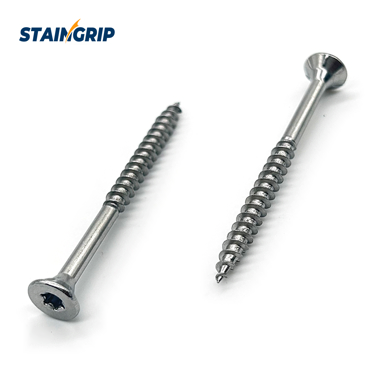
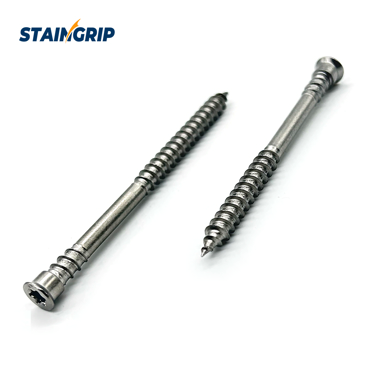
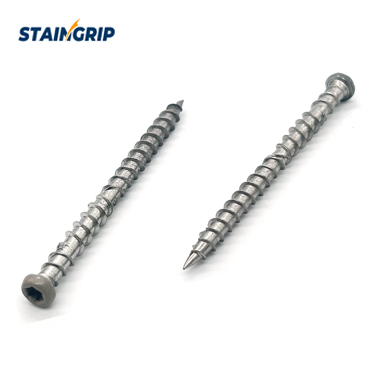
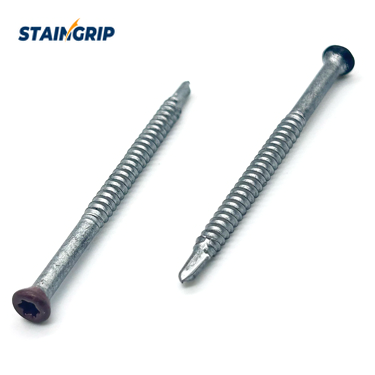
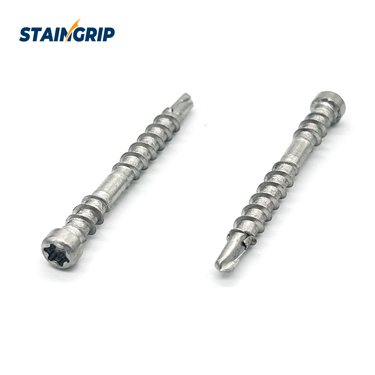
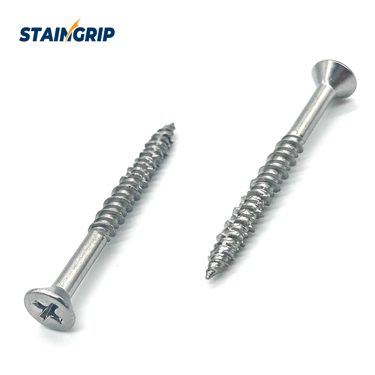
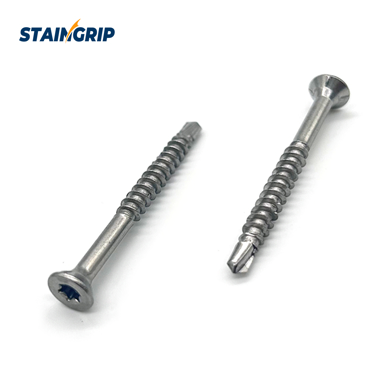
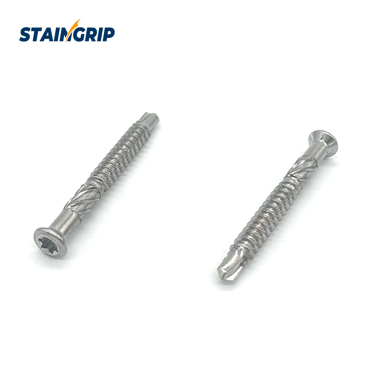
| 304 stainless steel | Technical behaviourAn austenitic chromium-nickel steel commonly called 18/8. It balances general corrosion resistance and formability. Cold working can strengthen it; conventional heat treatment does not harden it like 410. | Decking connection fitFor timber or composite decks on suitable supports where chloride exposure is limited. Match the screw design to board density, treatment and required seating depth. | Selection detailsAssess 316 where salt or chemical exposure is more demanding. The 304 designation does not establish a load rating or automatically certify an A2-70 property class. |
|---|
| 305 stainless steel | Technical behaviourHigher nickel content reduces work hardening compared with 304. Good ductility and cold-forming behaviour suit fastener manufacture, but do not guarantee that a finished screw cannot break during installation. | Decking connection fitAvailable on selected timber and composite deck screws. Useful where the screw design, board material and installation method are matched for repeatable driving and an even finish. | Selection detailsDo not infer lower driving torque or freedom from head breakage from nickel content alone. Correct bit fit, pilot-hole requirements and controlled seating still matter. |
|---|
| 316 stainless steel | Technical behaviourMolybdenum improves resistance to chloride-driven pitting compared with 304/305. This makes 316 worth assessing for salt exposure, while crevices, deposits and concentrated chemicals can still cause corrosion. | Decking connection fitConsider for coastal decks, boardwalks and salt-exposed locations. Confirm availability on the chosen product; 316 is listed on the reverse-thread composite range, not every deck model. | Selection detailsSelect by salt concentration, wetting, drainage and maintenance access. Distance from the coast alone is insufficient; 316 is neither a universal marine approval nor a lifetime guarantee. |
|---|
| 410 hardened stainless steel | Technical behaviourA magnetic martensitic grade that can be hardened by heat treatment. Hardness supports cutting and driving functions, but its corrosion resistance is lower than 304/305 or 316. | Decking connection fitUsed in selected composite and timber-to-metal deck screws for metal subframes. Verify joist material, drilling thickness and exposure; a 410 screw is not a coastal-grade substitute for 316. | Selection detailsUse product data for torque and strength rather than a generic high-torque claim. Review the exposure and finish carefully; hardened construction does not confer 300-series corrosion resistance. |
|---|
| Coated carbon steel | Technical behaviourHeat-treated designs can offer high strength and a lower purchase cost. Corrosion performance depends on the specified coating system; zinc plating, galvanizing and proprietary multilayer finishes are not interchangeable. | Decking connection fitCompare exterior-rated coatings for the exact board, joist and preservative. Permanent outdoor use is product-dependent; inspect accessible fixings and consider the cost of replacing buried or damaged screws. | Selection detailsCoating damage can reduce protection, although zinc can protect small exposed areas sacrificially. Compare installation, inspection and replacement costs as well as the initial screw price. |
|---|