
Record the condition before sealing and again at receipt. Use the shipment and storage condition record to keep package damage, opened stock and returned parts tied to their original lot.
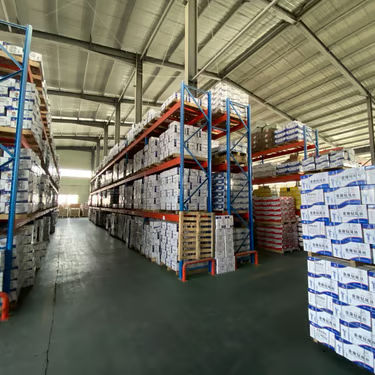
Why stainless screws still need surface protection
Stainless steel relies on surface condition as well as alloy composition. Debris from shared bins, carbon-steel brushes or previously used abrasives can contaminate an otherwise suitable screw. Packaging preserves the cleanliness achieved after manufacture only when handling equipment is appropriate for stainless parts and unidentified metal debris is controlled at the packing station. A shiny screw and a clean-looking bag do not by themselves demonstrate that control.
Stainless grade and packaging perform different functions. A corrosion-resistant grade does not make wet packing acceptable, and protective packaging does not upgrade an alloy for severe service. Treatments, lubricants or sealing components included with the screw can also affect packaging compatibility. The complete delivered configuration therefore gives the packaging supplier a more useful assessment basis than the alloy name alone.
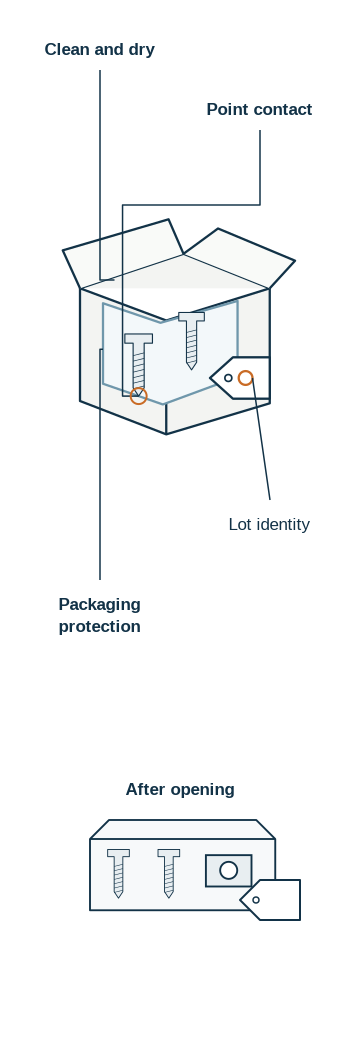
Check what is entering the package
Before sealing, check the screws, trays, liners and handling containers for retained moisture, processing residue and foreign metal debris. Record the condition being enclosed: protective packaging cannot automatically correct contamination already present.
Understand the function of each packaging method
Once the entering condition is controlled, packaging selection concerns how that condition will be maintained. Packaging names refer to different functions. A comparison becomes meaningful when each method is assessed against the same material, finish and transport requirements.
Swipe the table sideways to compare every column. Keyboard: use the left and right arrow keys.
| Method | What to evaluate |
|---|---|
| Ordinary barrier bag | Material, moisture transmission, closure and resistance to puncture. |
| Vacuum packaging | Dryness before sealing, suitable film and continued seal integrity. |
| VCI packaging | Compatibility with the metals, finish and complete enclosed packaging system. |
| Antistatic packaging | The required electrical protection separately from any corrosion or moisture claim. |
VCI materials release corrosion-inhibiting substances into the enclosed space. Performance depends on the selected system and how it is used. Tears can let contaminants enter and compromise the protected environment. A claim for one packaging product should not be extended to every film or every metal combination.
Design for sharp points and real handling
Swipe the table sideways to compare every column. Keyboard: use the left and right arrow keys.
| Handling concern | What to evaluate |
|---|---|
| Puncture risk | Protection also depends on surviving physical handling. Screw points and threads can puncture overfilled, tightly stretched or repeatedly shaken film. |
| Bag and carton arrangement | Bag size, inner protection and restraint within the carton therefore affect the result. |
| Evidence after normal handling | Seal observations after normal handling reveal conditions that an immediate packing-bench check may miss, including changes associated with vibration, stacking and temperature. |
For a new transport route or long storage requirement, a representative packaging trial with inspection at receipt connects the proposed protection to actual conditions. Temperature and humidity records can add useful context where appropriate. Neither film thickness nor vacuum level alone establishes a fixed storage life.
Use OEM Stainless Steel Screws & Packaging to discuss the pack format, quantity and identification needed for the intended shipment. The published packaging options do not establish a VCI or vacuum-system performance claim or a fixed storage life.
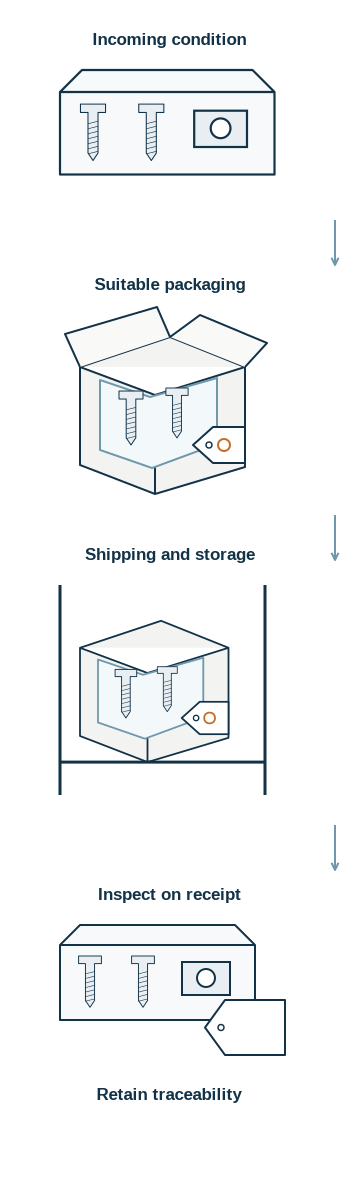
Manage temperature changes and opened packages
An intact film does not remove the influence of the receiving environment. Cold screws exposed to warmer humid air can develop condensation even when dry during packing. Acclimation and the timing of opening inner protection therefore matter. Keeping an intact system closed during acclimation may help when it is designed for that purpose; it does not resolve moisture already trapped inside or a damaged seal.
Swipe the table sideways to compare every column. Keyboard: use the left and right arrow keys.
| Stock condition | Why it needs a record |
|---|---|
| Partial withdrawal | Partial withdrawal changes the original closed-package condition. Resealing, replacement protection and remaining-quantity identification define the condition of the stock afterward. |
| Returns from assembly | Assembly-bench returns may have a different handling history from untouched stock even when size and grade match. |
| Mixing histories | Mixing them can conceal where contamination or moisture first entered and weaken a later staining investigation. |
Preserve traceability after delivery
Swipe the table sideways to compare every column. Keyboard: use the left and right arrow keys.
| Record | Details to enter |
|---|---|
| Lot and packaging | [Batch/package ID; screw and finish; pack quantity; receiving date]. Keep parts linked to their original package. |
| Before sealing and at receipt | [Recorded cleanliness/moisture condition; seal, liner or carton damage; photograph references]. Distinguish the two inspection points. |
| Storage and opening | [Storage conditions; opening date; partial withdrawal; resealing or replacement protection; quantity remaining]. |
| Returned or affected stock | [Assembly-return history; affected package/position; location of moisture or damage; retained sample IDs]. Keep different histories identifiable. |
| Investigation and disposition | [Unopened/newly opened package photos; comparison samples; material/surface findings; agreed action]. Separate packaging exposure from confirmed product findings. |
The order-specific plan discussed through Quality & Testing for Stainless Steel Screws can connect receiving condition and package records to the finished lot. Package observations and material or surface findings remain separate parts of a staining investigation.
Example: staining appears only in part of a shipment
A localized staining pattern shows how this history supports investigation. In a hypothetical stainless-screw shipment, marks concentrate near punctures in one inner bag. The carton, liner and affected samples together preserve the context. Comparison near and away from the damage, including moisture or foreign particles, can direct attention toward packaging exposure. The pattern alone still cannot rule out an earlier material or surface problem.
Packing photographs, batch records and retained references, where available, give the receiving observations a comparison basis. Proposed cleaning or repacking needs a defined scope and verification before the goods return to stock. The conclusion should distinguish cosmetic contamination, confirmed substrate attack and unresolved findings. An effective correction addresses the established entry route or handling step, rather than merely changing bag color or adding an arbitrary amount of desiccant.
Common questions
Does vacuum packing guarantee rust-free screws?
No. Vacuum does not establish that parts were dry or clean, and protection also depends on film, seal and transport integrity. Evidence for the complete packaging arrangement is needed to judge its suitability.
Is an antistatic bag automatically corrosion protective?
No. Electrical and corrosion protection are separate functions. Some specified products combine them, but each required function needs its own supporting product information and application verification.