Use the RFQ outline to describe the screw, connection and required evidence. Ask each supplier to identify deviations before comparing prices.
Describe the connection as well as the screw
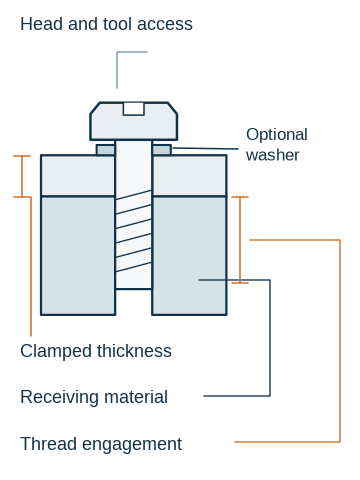
Specify the connection alongside the screw so the RFQ describes a measurable requirement.
Swipe the table sideways to compare every column. Keyboard: use the left and right arrow keys.
| Detail | What to describe |
|---|---|
| Receiving material and connection type | Identify the receiving material and whether the screw enters a tapped metal hole or forms its own thread in timber or sheet metal. These connections raise different selection and inspection questions. |
| Thickness or engagement arrangement | Describe the receiving thickness or the intended engagement arrangement. |
| Environmental exposure | State the environment in which the connection will be used. |
| Installation method | Describe the installation method the screw must support. |
| Drawing and critical features | Identify the drawing revision and critical head-seating, drive-access and point requirements. |
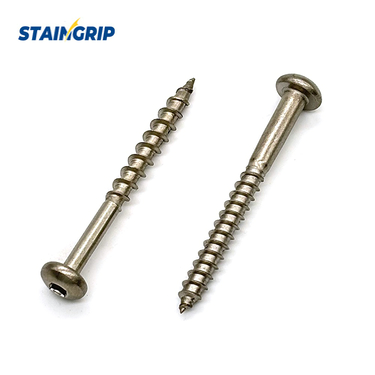
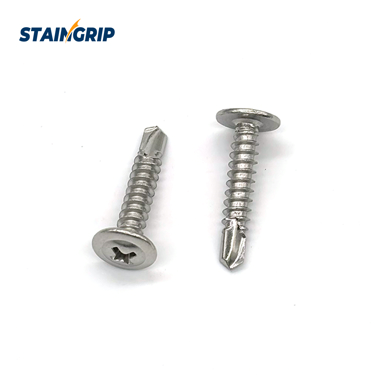
For example, pan-head square-drive wood screws require a timber-joint description, including the bearing face and thread engagement. wafer-head self-drilling screws raise different questions about the receiving sheet, support thickness, drilling point and head clearance. These product pages help identify the design family; the final material and configuration still belong in the quotation.
Write material choices as engineering requirements
Select material against the service exposure and installation task, rather than an undefined best-stainless label.
Swipe the table sideways to compare every column. Keyboard: use the left and right arrow keys.
| Decision | Information or evidence needed | What the comparison must preserve |
|---|---|---|
| Service exposure | Water, cleaning chemicals, salt deposits, temperature and access for maintenance. | A dry indoor cover and a sheltered coastal joint can expose similar-looking screws to very different environments. |
| Material and strengthening route | The proposed material and its relevant finished condition. A 410 screw can be heat treated for particular mechanical properties; a 316 screw follows a different strengthening route. | Neither material description alone proves drilling capability in the specified substrate or resistance to the intended tightening load. |
| Installation performance | Evidence from the finished geometry and a representative assembly. | Check the actual drilling and tightening requirements, especially when a proposed substitution changes the stainless family. |
These details let the supplier explain the proposed material and finish against the application.
Separate material identity from finished properties
A supplier’s conformity evidence needs to connect the stated material and performance requirements with the delivered product. Material identity and finished properties answer different questions.
Swipe the table sideways to compare every column. Keyboard: use the left and right arrow keys.
| Requirement | Evidence to connect to the delivery | Limit of the evidence |
|---|---|---|
| Material identity | Agreed traceability records that link the material certificate to the screw or production batch. | Appearance and a magnet test are not reliable substitutes for grade verification. |
| Finished properties | The finished material condition and processing history relevant to the specified performance. Common austenitic stainless steels can strengthen through cold work, while annealing changes that condition. | The grade name alone cannot describe every property of the finished screw. |
Specify the surface condition at delivery
Material verification does not define the delivered surface. The surface requirement must cover the condition the buyer receives.
Swipe the table sideways to compare every column. Keyboard: use the left and right arrow keys.
| Area to specify | Required basis | Why it matters |
|---|---|---|
| Treatment selection | Choose the appropriate treatment for the actual surface condition. | Cleaning, pickling and passivation serve different purposes. |
| Agreed result | Specify the delivered condition and the agreed result, rather than naming only an intermediate manufacturing step. | A process name does not replace an agreed result. |
| Handling and packaging | Include the conditions after surface treatment. | A clean stainless surface can become contaminated again during handling or packaging. |
The available coating and finish options can help frame this part of the inquiry. State the required delivered result and any verification method alongside the requested treatment, so the supplier can confirm the scope for the selected product.
For shipment and warehouse controls, review protecting screws from corrosion during shipping and storage alongside the required delivered surface condition.
Define sample approval and later change control
A sample becomes a production reference when its record identifies the evaluated features, methods and conditions.
Swipe the table sideways to compare every column. Keyboard: use the left and right arrow keys.
| Control area | What the record must establish |
|---|---|
| Geometric evaluation | Critical dimensions and their measurement references. |
| Functional evaluation | The required thread inspection or a representative installation test. |
| Finish evaluation | The acceptable surface condition and treatment evidence. |
| Sample identity | Sample identification and the drawing revision, linking the approval record to the evaluated part. |
| Change notifications and renewed verification | Which material, tooling or process changes trigger notification or renewed verification. A new material source, forming route or surface process may alter what the original sample represents. |
| Traceability through supply | A connection between the approved specification, production records and delivered batch, supported by evidence proportionate to the application. |
Record the approval scope and accepted exceptions. Dimensional acceptance does not verify corrosion resistance or installation strength. Application trials need representative receiving material and a documented setup, including any lubricant or treatment supplied on production screws. An unlabelled sample, polished display part or untreated specimen may not represent the delivered product.

Compare the included scope before the total price
A line-by-line comparison makes exclusions and unresolved items visible. Use the same requirement on both sides, rather than treating an omission as a confirmed match.
Swipe the table sideways to compare every column. Keyboard: use the left and right arrow keys.
| Requirement | What both quotations should identify |
|---|---|
| Part definition | Drawing revision; dimensions and tolerances; thread, head, drive and point. |
| Material and properties | Material designation, finished condition and specified mechanical requirements. |
| Delivered surface | Required cleaning or treatment, finish condition and any lubricant. |
| Approval and records | Sample-approval scope, inspection documents, traceability and any agreed application test. |
| Supply terms | Quantity, packaging, delivery and commercial terms, with deviations or exclusions made explicit. |
For stainless metric machine screws within the scope of ISO 3506-1, the material group and property class work together. A grade name and dimensional designation may still leave the mechanical requirement undefined. The standard must be matched to its applicable product scope; it is not a universal acceptance specification for every wood, tapping or self-drilling screw. [1]
RFQ outline to copy
- Screw type and drawing reference / revision
- [ ]
- Dimensions, tolerances, thread, head, drive and point
- [ ]
- Material and required finished properties
- [ ]
- Receiving material, thickness and installation method
- [ ]
- Service environment and delivered surface
- [ ]
- Sample approval and inspection records
- [ ]
- Quantity, packaging and delivery requirements
- [ ]
- Supplier deviations, exclusions and items to agree
- [ ]
Example: specifying screws for a coastal enclosure
For a hypothetical enclosure near saltwater, direct spray, sheltered salt accumulation and occasional airborne deposits describe different screw exposures. The enclosure material, sealing arrangement and maintenance access provide further context for the screw type and engagement. A corrosion-resistant alloy is only one part of this specification: local joint details affect where moisture remains and how the connection can later be inspected.
The approval record can therefore combine dimensional inspection, material traceability, agreed surface verification and an installation trial in the actual housing. Any required corrosion test needs a defined purpose and acceptance basis. A supplier’s proposed deviation belongs in the review before production. This combination supports a purchasing decision based on the complete supplied screw and connection, rather than an isolated alloy name or an attractive sample.

Common questions
Should I request every possible test report?
A useful report is tied to a defined requirement. Its specimen, method, conditions and acceptance criteria need to match the screw and intended application. Additional unrelated reports do not make the order better specified.
Is the cheapest quote comparable if the size is identical?
Only after material, finish, tolerances, testing, packaging and commercial terms are aligned. A common nominal size is only one part of the purchasing specification.
Reference Standards
These references describe standards and test methods within their stated scope. Listing a standard does not mean that a StainGrip product is certified to it or that a specific batch has passed a test.